Stagy
Synchrony Made Tangible
01 Melodies: Disconnected
1.1 MARKET RESEARCH
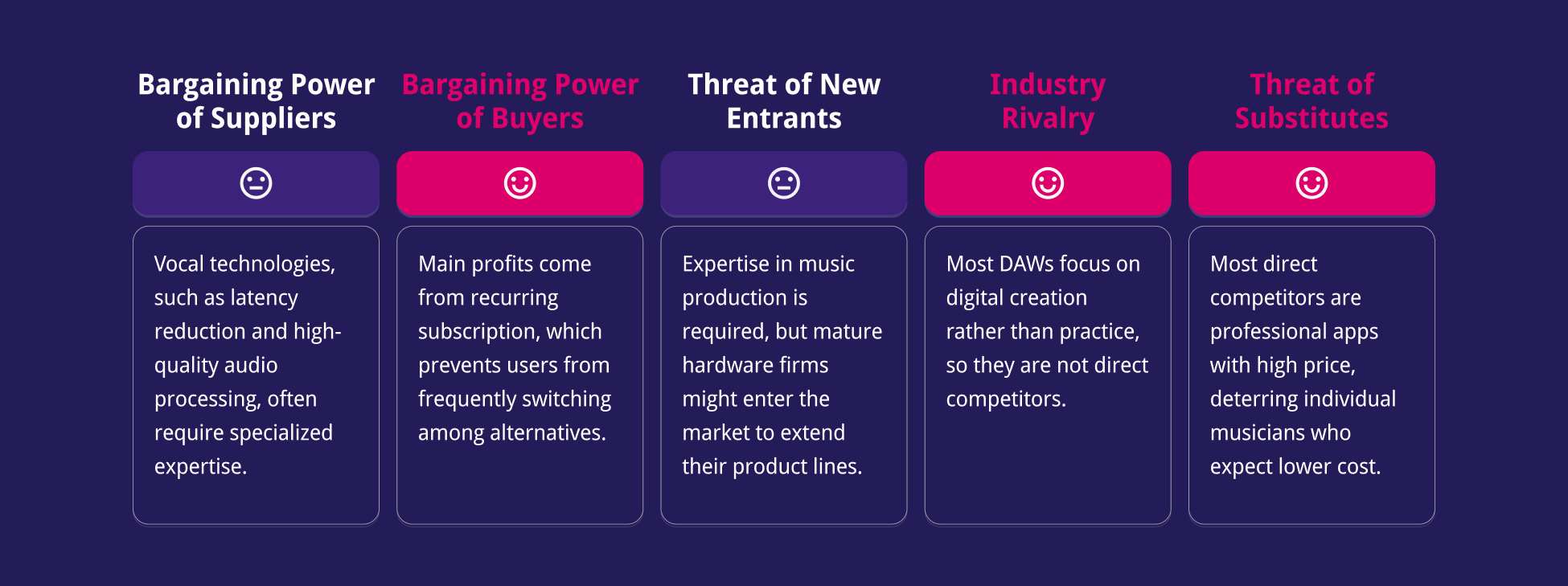
Preliminary market research shows the Digital Audio Workstation (DAW) market grows rapidly, yet few tools support musicians’ in-person performance. Recognizing this gap, I positioned my product for a niche audience focused on improving live practice and performance skill development, leading to the subsequent ethonographic discovery study.

1.2 Contextual Inquiry
As music production digitizes, it remains unclear whether the spatial and temporal synchrony of in-person rehearsal can be replaced.
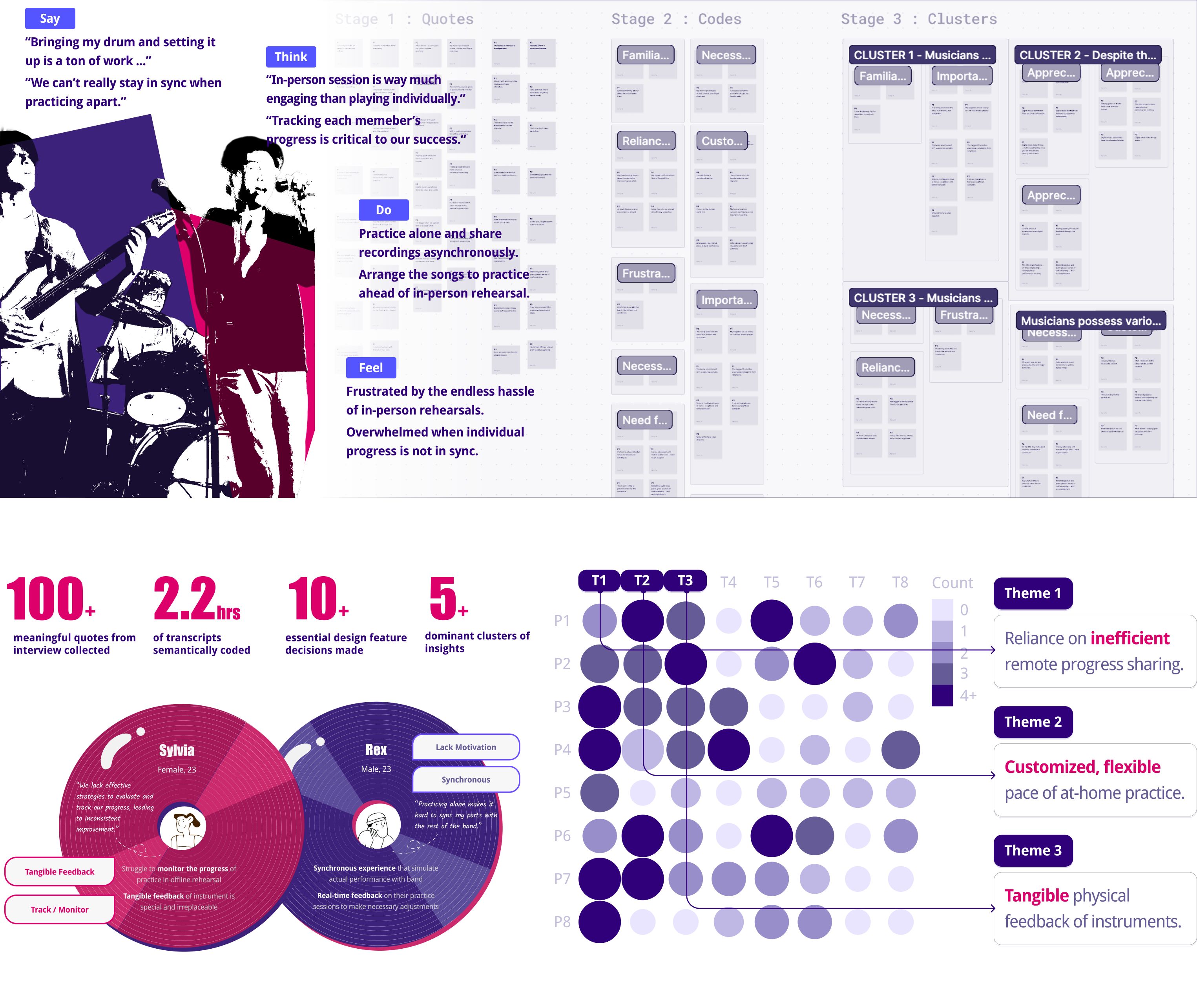
I then examined whether digital tools can replace the synchrony of in-person rehearsal. I conducted contextual inquiry with 8 musicians across instruments, observing at-home practice routines and obstacles. Bottom-up thematic clustering revealed intimidating barriers to synchronous rehearsal: time, space, and cost. Solo practice suffers reduced engagement, slow progress, and limited feedback.
02 Rehearsal: Orchestrated
When physical presence is compromised, how can we preserve the motivational and perceptual qualities of collaborative music making?
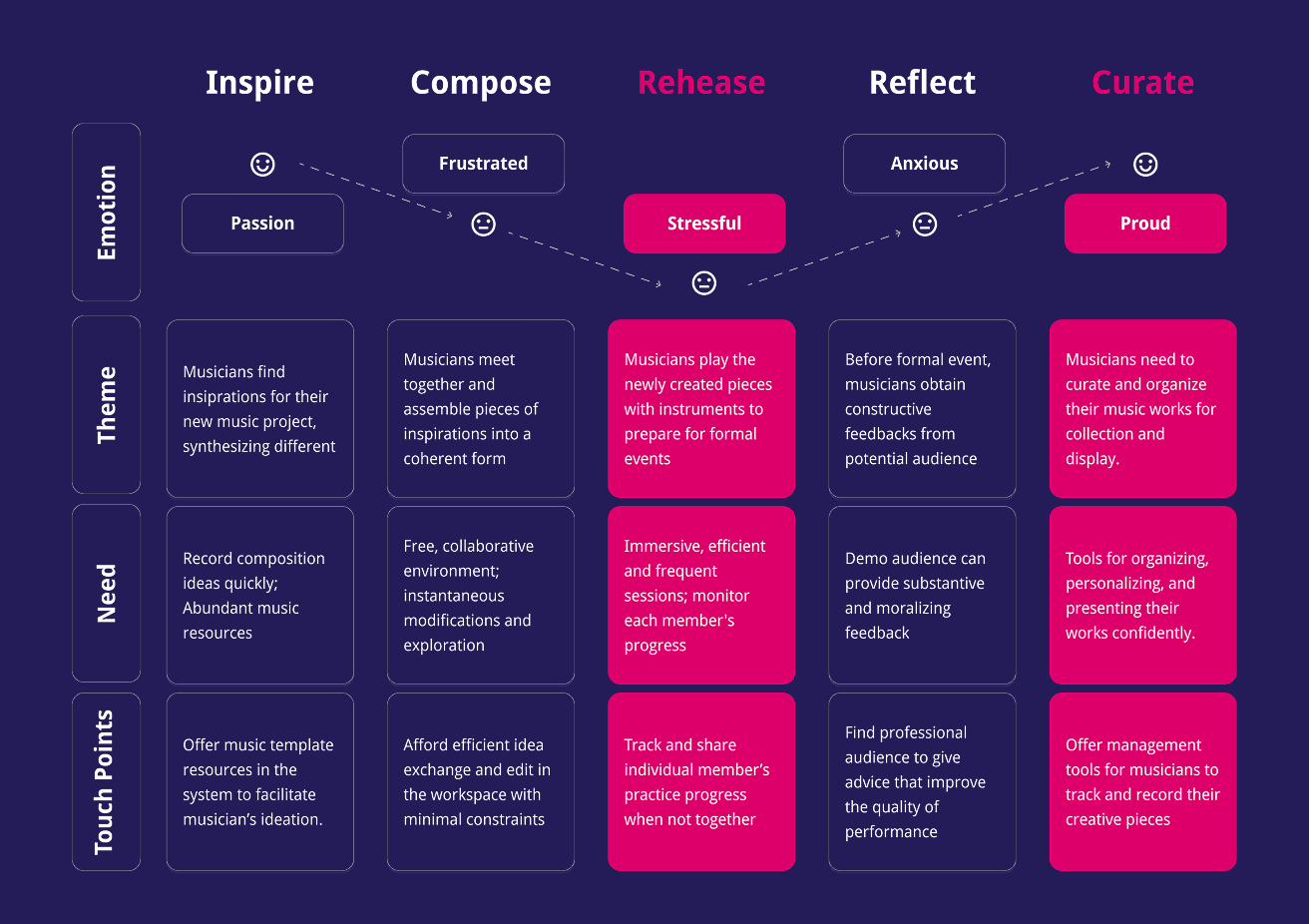
2.1 Current: A Musician's Journey
2.2 Redefined: A "Stagy" Journey
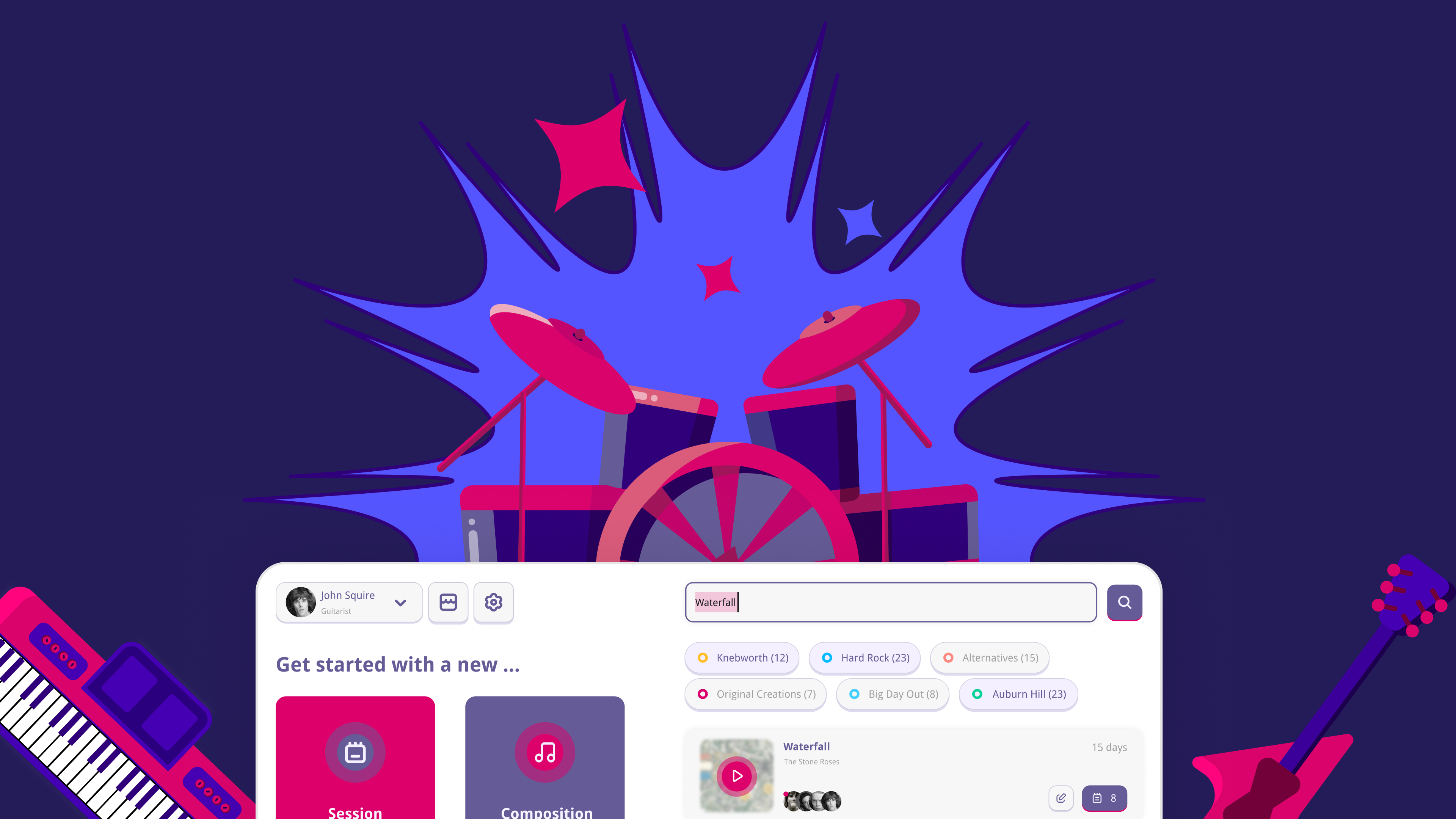
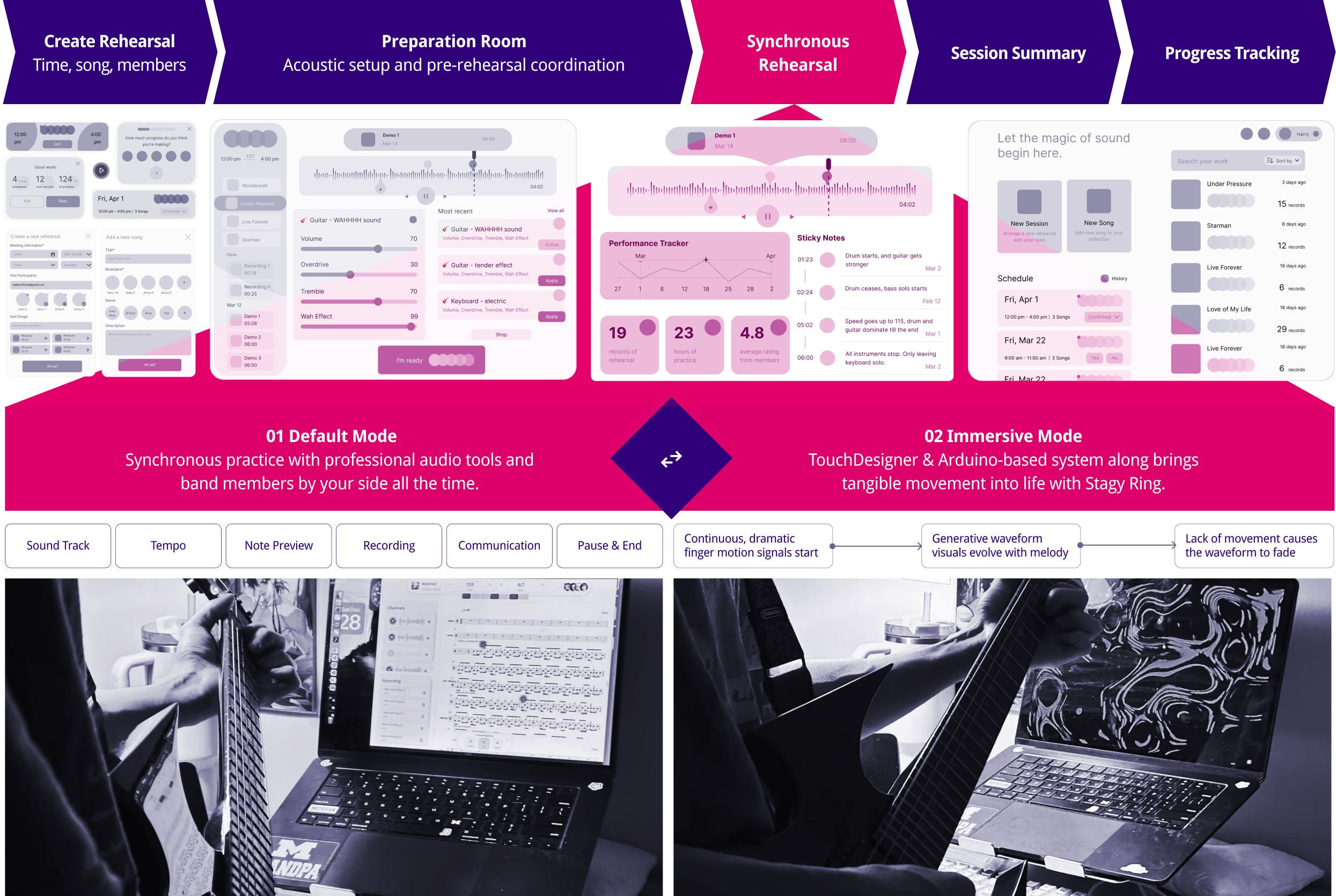
Stagy aim to address the problem socially and sensorially as a dual system. During rehearsal, Stagy Desktop tracks gestures to switch between default mode with notes and audio tools and immersive mode, where each beat triggers animations that amplify the performer’s physical presence.
2.3 Feature Priority
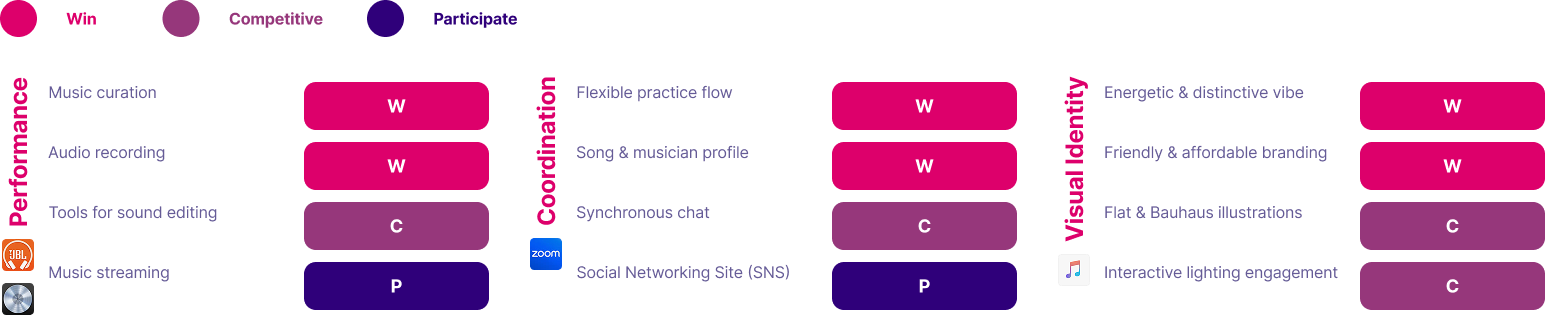
Guided by the design concept, I defined acoustic, communication, and visual requirements to scope the project. Features were then prioritized using the PCW (Participate, Compete, Win) framework.
03 Synchrony: Reconnected
3.1 Design Library
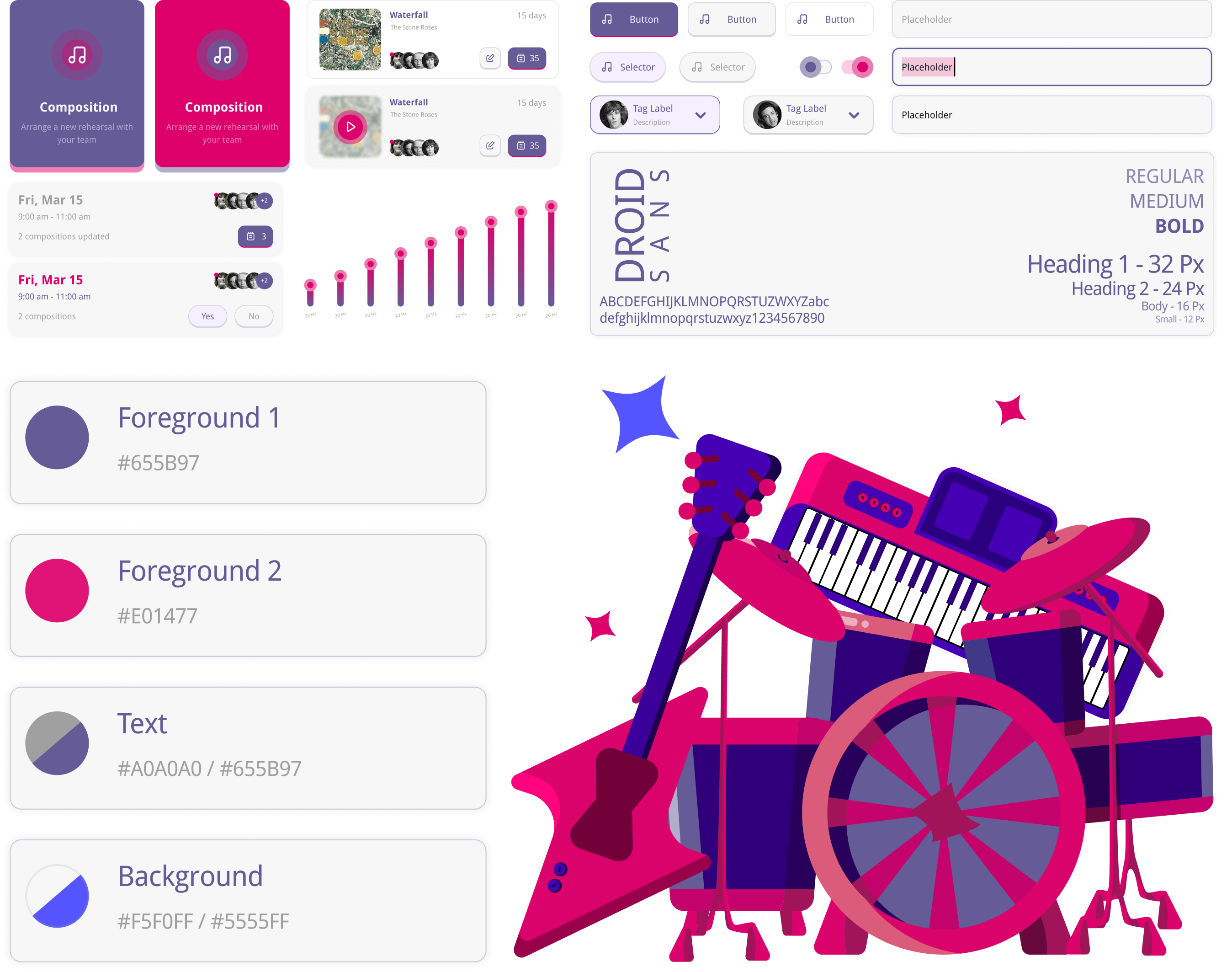
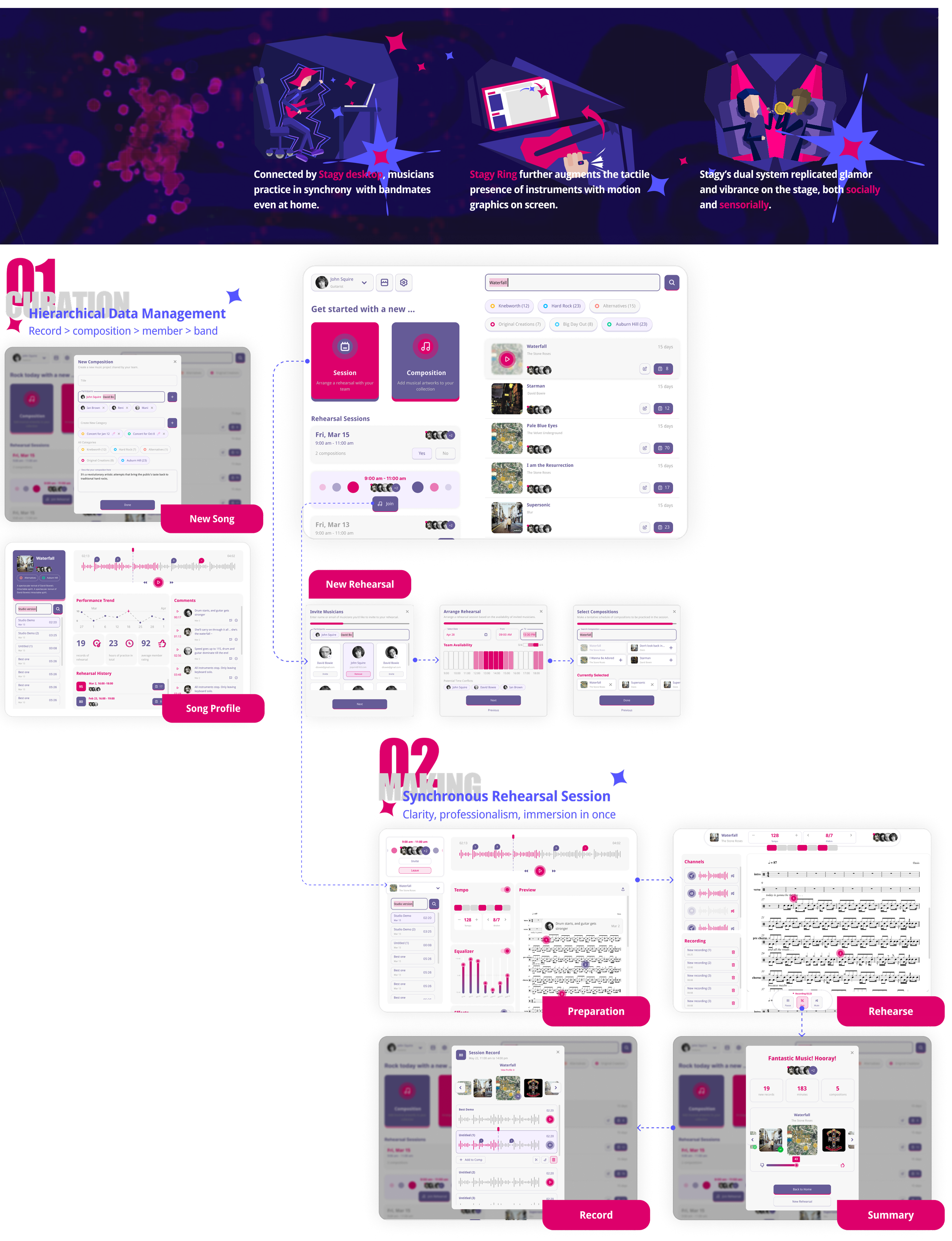
Music making is inspiration-driven, sometimes even whimsical, requiring the infusion of magic. Stagy adopted split analogous harmony of Muted Violet and Fuchsia Rose as primary colors, reminiscent of the excitement of a momentary whim. These design decisions culminated into a fully scalable and responsive design library featured by vibrant contrasting color themes and Bauhaus & Swiss International Style graphics.
3.2 Coordination: Desktop
Engaging rehearsals unfolds both socially and sensorially, where real-time feedback remains continuously visible.
Working within my established design library, I developed a comprehensive high-fidelity prototype from the ground up, spanning UIUX , visual identity, illustration, and end-to-end service flow. The desktop system prioritizes clarity, temporal and spatial synchrony, and shared feedback to support remote rehearsal, setting software foundation for the Stagy Ring, a wearable that restore the tangible quality of instrument playing through embedded accelerometer.
3.3 Physicality: Stagy Ring
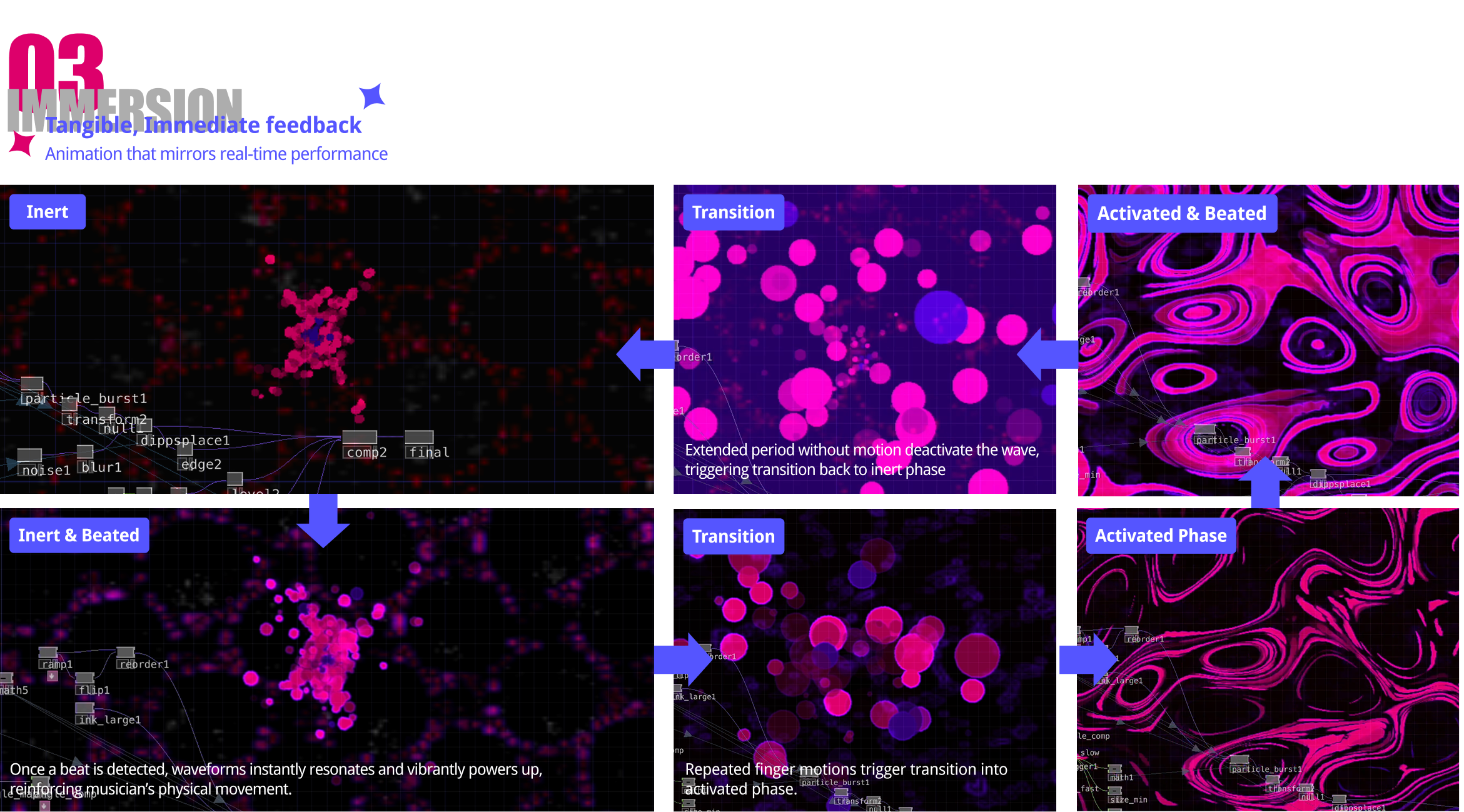
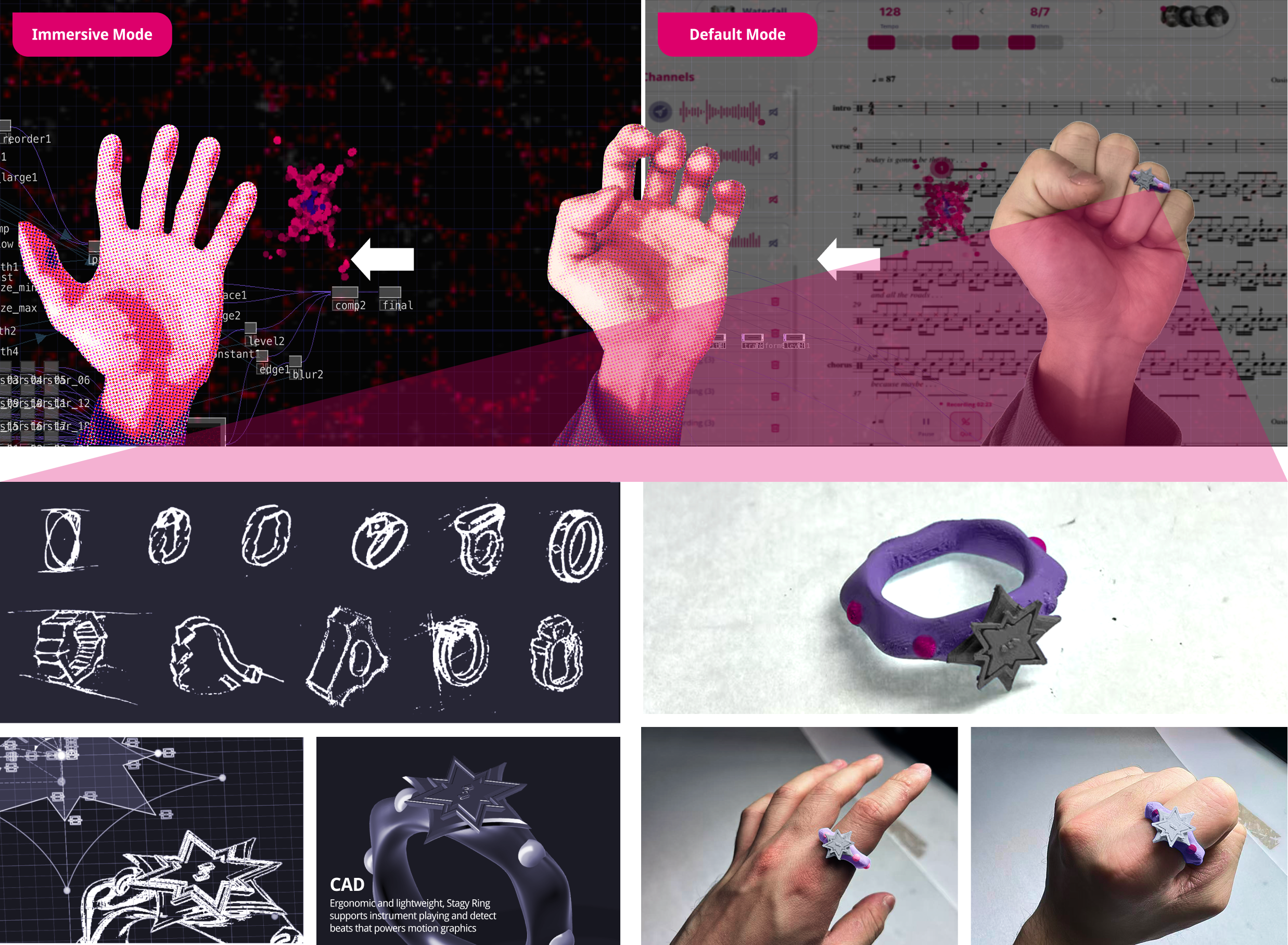
Musicians can swap between default mode and immersive mode via gesture. The former empowers focused performance and audio tools, while the latter translates finger motion into generative particles waveforms powered by TouchDeisgner.
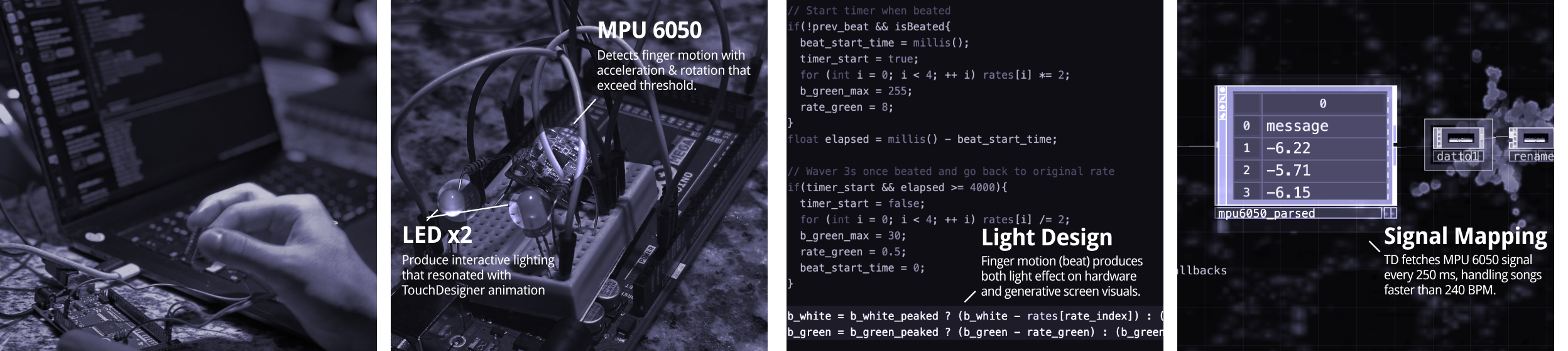
MPU 6050 senses musician’s hand acceleration. It parses those signals that potentially suggest a “beat” (e.g. pluck string & hit drum) and map them into CHOP data that controls imagery properties in TouchDesigner.
Stagy Ring was iteratively refined on paper and modeled in Fusion 360. Its dynamic, ergonomic, avant-garde form echos the pulsing geometry of the TouchDesigner animation and supports instrument performance.

Last: Odorable
Next: Ariat